
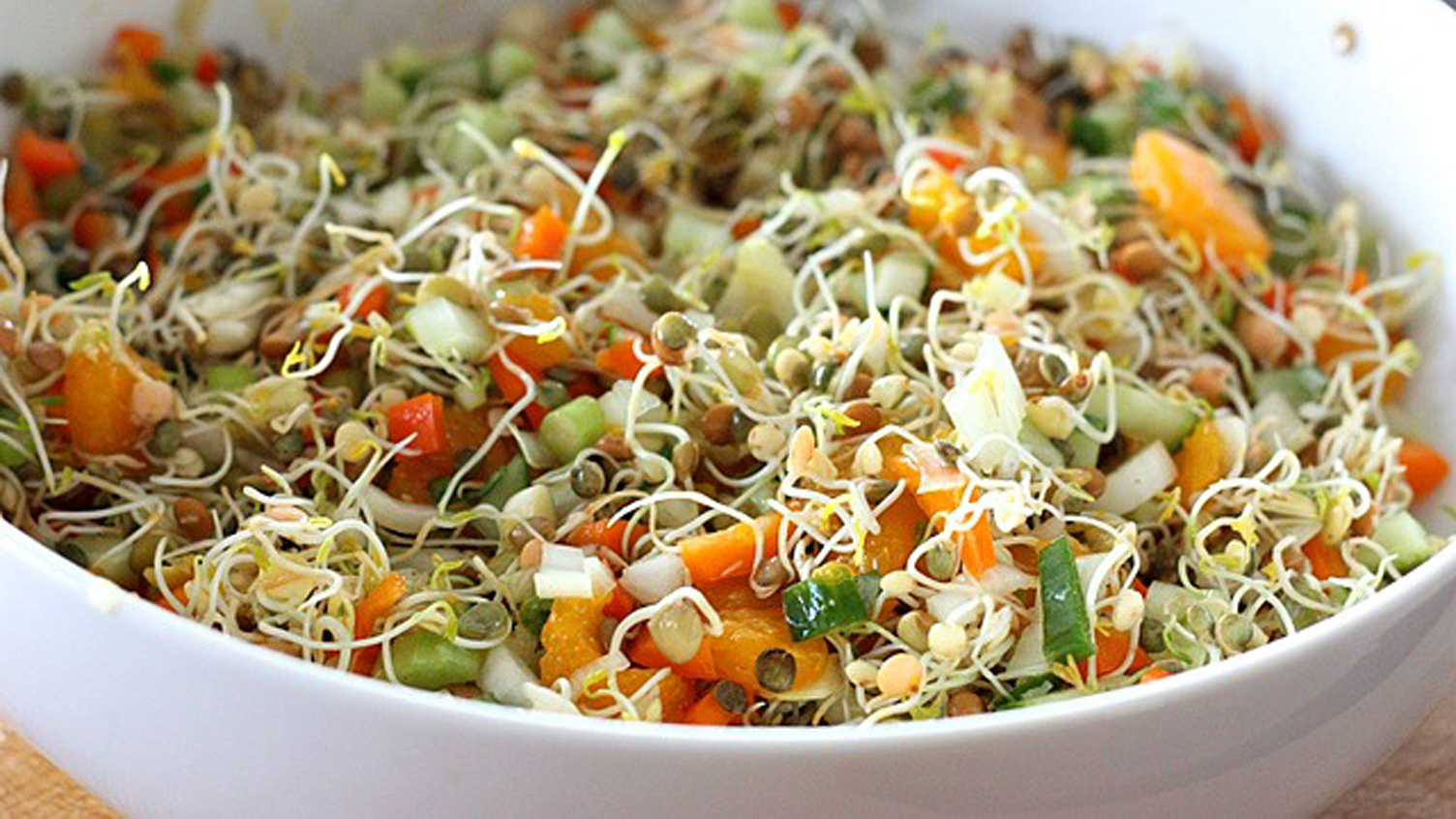
Shredded Sprout Salad Recipe
Ingredients:
- 1 cup Shredded carrots
- 1 cup Shredded cabbage
- 1 cup Diced celery
- 1 cup Alfalfa sprouts (can substitute other types)
- 2 tbsp Lemon juice
- Spices as desired
Join Our Vibrant Health Newsletter
Virtual Appointments Available
Shredded Sprout Salad Recipe
Ingredients:
Prana is a concept from Ayurveda, a traditional healing system that originated in India thousands of years ago. The word means “life force” or “vital energy.” Ayurveda teaches that prana exists in food, air, water, and living things, and that the amount of prana we take in affects our health and energy levels. The more prana we take in, the more vibrant, balanced, and energized we are.
Unlike modern nutrition, which measures and categorizes food by calories, vitamins, and other nutrients, Ayurveda instead asks whether a food, place, or activity adds or depletes energy from the body.
The Energy Within Food: High-Prana Choices
According to Ayurveda, food carries different amounts of energy depending on how natural it is and how much processing it has undergone. In yogic and Ayurvedic tradition, prana represents the living energy in food that nourishes your body and mind.
High-prana foods include fresh fruits, vegetables, and whole grains, especially when eaten soon after harvest.
Freshness and Ripeness: Food holds the most life energy right when it’s harvested; the longer it sits, wilts, or gets reheated, the more that energy fades.
Sprouting: Turning a dormant seed, nut, or legume into a sprout unlocks a surge of vitality and nutrients that weren’t as accessible before.
Organic and Chemical-Free Growth: Organic produce, grown without synthetic pesticides or fertilizers, keeps its natural energy intact, so your body doesn’t have to spend effort filtering out chemical residues.
Proximity to the Source: Food grown nearby carries more life force since it skips long transport times, artificial preservatives, and early picking. In addition, it’s naturally in sync with your local environment.
Minimal Processing: Eating food raw, lightly steamed, or gently cooked keeps its subtle energy structure intact, while heavy processing, canning, freezing, or deep-frying tends to strip it away.
Effects of Low-Prana Foods
Foods that are highly processed, packaged, or stored for long periods are considered low in prana according to Ayurveda. While they may still provide calories, they are viewed as having less life energy. From an Ayurvedic perspective, these foods can leave the body feeling depleted because more of its energy may be needed for digestion and processing.
This principle explains why we experience food cravings. When people eat mostly foods that are low in prana, their bodies still feel undernourished at an energetic level, so it keeps signaling for more food even when caloric needs have been met. Since processed foods are often the most convenient, the cycle continues, leaving people unsatisfied, fatigued and in a constant state of low energy.
In Ayurveda, ongoing fatigue is often linked to low prana rather than just poor sleep or diet quantity. The body is compared to a battery: eating high-prana food helps recharge it, while eating low-prana foods, or not getting enough rest, air, or movement, drains it.
From this perspective, someone can be eating enough food overall and still feel tired if that food lacks life energy.
The Takeaway
Prana offers a simple framework for thinking about energy through food: what we eat, how fresh it is, and where it comes from, all affect how much life force energy it carries. Choosing fresh, whole foods over processed or reheated meals, favoring organic over chemically treated produce, and eating locally grown food, are the main ways Ayurveda recommends keeping energy vibrant. Prana is not something that can be measured with standard scientific tools, but that has never been the point. In Ayurvedic tradition, it is meant to be felt and experienced, not calculated.
By Dr. Salzarulo, DC, PT and Rachel Kessler, MS.
“Alzheimer’s disease can be prevented, and in many cases, its associated cognitive decline can be reversed.” Dr. Dale Bredesen, MD. Author of “The End of Alzheimer’s.”
Dementia is one of the most feared conditions associated with aging, and understandably so. It threatens our independence, identity, and quality of life. In the United States, the lifetime risk of developing dementia after age 55 has been estimated at approximately 42%, meaning about 4 in 10 people over 60 will develop dementia during their remaining lifetime (1). The good news is there are so many things that can be done to change these odds.
Many of my patients have shared worries and concerns like these:
“I’m forgetting things more often, my keys, names, even my phone.”
“My memory is slipping. It scares me.”
“I don’t want to lose control of my life or my rights.”
“I’m afraid my family will go bankrupt paying medical bills.”
“My family has a history of dementia, what can I do to prevent onset?”
These fears often arise when people notice unsettling changes in memory, focus, and daily function. While many people assume dementia appears suddenly at a very old age, the reality is that it starts much sooner, even as early as your 20’s (2). Dementia is a slow, silent process that often begins decades before a diagnosis is ever made.
Many people confuse Alzheimer’s disease with dementia, but Alzheimer’s disease is the most common form of dementia, accounting for approximately 60–70% of cases (3). There are several other types of dementia, but they all share a common truth: by the time symptoms are obvious, the brain has often been under stress for many years (4). This is precisely why early awareness and early action matter, whether you are currently healthy or already noticing changes in your mental status.
These are some of the hidden triggers that can slowly damage the brain over time:
These factors quietly damage brain cells over time, gradually setting the stage for cognitive decline and dementia. For those who are currently healthy, addressing these issues early is critical for prevention and risk reduction. For those already experiencing changes, immediate intervention can reduce further damage and optimize brain function.
“Waiting for severe memory loss means missing the best opportunity for early action.”
The brain is remarkably resilient. Even when inflammatory changes are already present, targeted lifestyle and holistic interventions can assist in brain healing. This ability, called neuroplasticity, means the brain can rewire itself and build new connections over time; helping it adapt, repair, and function better (5). Here are some key practices to consider:
Blood sugar: Supporting brain health begins with blood sugar balance, since glucose is the brain’s main source of energy. People with diabetes have about a 50–90% higher risk of developing dementia over time (6). Follow a blood-sugar balancing diet with protein, healthy fats, fiber-rich vegetables, and low-glycemic carbohydrates, and use targeted supplements as needed to stabilize glucose and protect brain health.
Sleep: Sleep is critical for brain detoxification and repair. During deep sleep, the brain clears metabolic waste through the glymphatic system (the lymph system of the brain). Poor or insufficient sleep impairs this process, increasing neurotoxic buildup and accelerating brain aging (7). A minimum of seven and a half hours of quality sleep in a dark room is recommended, though many people may need more to fully support brain health and detoxification.
Oxygen and circulation: The brain requires consistent oxygen and nutrient delivery to function optimally (8). Conditions such as insomnia, sleep apnea, interrupted sleep, and poor circulation reduce oxygen supply, increase brain stress, and raise dementia risk. Regular exercise, deep breathing, maintaining cardiovascular health, getting quality sleep, and treating sleep issues help healthy cerebral blood flow and oxygenation.
Hydration: Adequate hydration supports cerebral blood flow, nutrient delivery, and waste removal from brain cells. Even mild dehydration can impair attention, memory, and mental clarity (9). Replenishing with adequate fluid intake is essential for maintaining optimal brain health and performance, particularly with aging. As a general guideline, strive for at least half of your body weight in ounces of filtered or spring water each day.
Supporting detoxification pathways: Detoxification is often overlooked in dementia treatment. The Nrf2 pathway, which optimizes cellular detox and protection and regulates antioxidant defenses (10), can be activated through antioxidant-rich foods (like berries, leafy greens, and colorful vegetables), exercise, and targeted supplements. This supports toxin clearance, reduces inflammation, and protects brain cells from oxidative damage (the harmful effects of free radicals).
Reducing toxic load: Prolonged exposure to harmful substances accelerates inflammation and disrupts brain function. Environmental toxins, including heavy metals and mold, can damage neurons, impair brain signaling, and contribute to systemic inflammation. Supporting detox pathways and limiting exposures is essential. Avoid toxic home cleaners, detergents, and personal care products, as well as processed foods, added chemicals in foods, refined sugars, and processed oils. Choosing cold-pressed and expeller-pressed oils will significantly decrease the toxin burden. Use essential tools, such as water filters and air purifiers, to further protect the brain from harmful chemicals.
Sauna therapy: Sauna is a powerful tool for brain and body detoxification. A Finnish study found that regular sweating helps eliminate heavy metals and toxins, improves circulation, reduces inflammation, and boosts cardiovascular and brain resilience (12). The same study found that men who used a sauna 4–7 times per week were 66% less likely to develop dementia than those who went only once per week (13).
Stress reduction: Long-term stress keeps the body in “fight or flight,” raising cortisol levels that can damage brain cells and shrink the brain’s memory center. Calming practices help the nervous system reset and protect brain health. Making your exhale longer than your inhale is one of the fastest ways to stop a cortisol surge. Practices such as meditation, yoga, mindful walks, gardening, Tai chi, prayer,
grounding (earthing), and regular exercise can further support long-term brain health and help maintain normal cortisol levels. In some cases, targeted supplements may also be helpful in supporting healthy cortisol balance.
Brain Rewiring: Neuroplasticity is the brain’s ability to rewire itself and form new connections. It thrives on challenges, whether learning a new language or dance step, playing music, doing a crossword puzzle, exploring a hobby, or even taking a different route on your walk. Regular mental challenges strengthen memory, build resilience, and support long-term brain health.
Targeted testing uncovers hidden triggers behind brain inflammation, cognitive decline, and long-term neurological damage. Many individuals experiencing symptoms of dementia show positive findings on these targeted tests, helping to clarify what is driving their cognitive changes. Once these root causes are known, specific interventions can be implemented to protect and support brain health.
Next steps: Once testing identifies what is affecting your brain, holistic programs can be implemented to clear toxins and pathogens, correct imbalances, and support long-term brain health.
Dementia does not happen suddenly; it develops quietly over many years. By identifying what harms your brain and acting early, you can prevent or even reverse cognitive decline. Every small step – supporting detox pathways, reducing inflammation, nourishing your nervous system, balancing blood sugar, improving sleep, staying well-hydrated and challenging your brain- strengthens your brain’s resilience and ability to heal. The choices you make today can protect your independence, your memory, and your quality of life for years to come.
By Dr. Salzarulo DC PT and Rachel Kessler MS
ION Gut Support: Strengthen Your Gut, Support Your Health*
Your digestive tract isn’t just responsible for breaking down food—it also serves as a protective barrier. When it’s healthy, it functions like a fine mesh, allowing nutrients to pass through while keeping out harmful bacteria, toxins, and bits of undigested food.
However, when your gut becomes stressed—often due to a poor diet, toxin overload, pathogens, blood sugar imbalances, or chronic stress—that protective barrier can begin to break down.
This condition is commonly known as leaky gut, and it occurs when the lining of the intestines becomes too porous. Larger particles, like undigested food, pathogens and toxins, can then “leak” into the bloodstream. Once there, the immune system sees them as intruders and mounts an attack.
When this happens repeatedly, the body becomes trapped in a cycle of chronic inflammation. The immune system never gets a chance to rest, which can contribute to a wide range of health issues over time.
ION Gut Support* has been clinically shown to support the healing of leaky gut by sealing the cells of your gut lining, creating a healthier foundation for a diverse and thriving microbiome. Its key ingredient—a soil-derived humic extract—supports the tight junctions between gut cells, helping block harmful toxins while improving nutrient absorption and hydration.
What are tight junctions?
Tight junctions are the connections between the cells that line your intestines. They act as gatekeepers, controlling what passes into your bloodstream. When these junctions are strong and functioning properly, your gut lining can better protect against digestive issues like gas, bloating, and indigestion.
Zinc is a trace mineral, meaning it is needed by the body in very small (trace) amounts, and its impact on health is anything but minor. From powering immune responses to supporting hormonal and thyroid function, zinc is essential for nearly every cell in the body. Despite its importance, zinc deficiency remains a global health concern, affecting growth, immunity, cellular health, hormonal function, and even cognition.
Why Zinc Matters: Core Functions in the Body
Zinc is involved throughout the entire body, and is essential for:
Without adequate zinc, the body’s ability to function, heal, and protect itself from damage caused by free radicals (unstable molecules that can damage DNA), is significantly impaired.
Dietary Sources of Zinc
Zinc can be obtained through a diverse diet. While animal products offer highly bioavailable forms of zinc, certain plant foods are also rich in this mineral.
Plant-Based Sources
Animal-Based Sources
Zinc and Thyroid Health
One of Zinc’s lesser known yet vital roles is in supporting thyroid function.
Immune System Support
Zinc supports a strong immune system by aiding in the development of various immune cells, including T cells, B cells, and white blood cells, helping the body ward off infections and reduce inflammation.
Wound Healing
Zinc promotes collagen production and tissue regeneration, accelerating wound repair.
Cognitive Health
It supports neurotransmitter activity and neural function, playing a significant role in key brain functions such as memory, mood, learning, and emotional regulation.
Hormonal Balance
Zinc is crucial for testosterone, insulin, and estrogen production and regulation, impacting reproductive, metabolic, and menstrual health.
Skin Health
Zinc’s anti-inflammatory and antimicrobial properties play a vital role in promoting healthy skin and wound healing, reducing inflammation, and boosting immunity. It is effective in assisting in healing acne, eczema, and other dermatologic conditions.
Digestive Health
Zinc supports enzyme function in the gut and maintains the integrity of the intestinal lining, which helps prevent leaky gut, or increased permeability in the gut. In doing so, zinc helps maintain optimal microbiome balance.
Summary
Zinc is a cornerstone of human health, with functions spanning from the molecular level to whole-body systems. While most people can meet their needs through a balanced diet, many individuals may benefit from supplementation. The amount needed varies depending on lifestyle, age, diet, weight, and specific health concerns.
By Dr. Anthony Salzarulo DC PT and Rachel Kessler MS
Fill out the form below, and we will be in touch.